
If you’ve ever dealt with bed bugs, you know how stressful and frustrating they can be. These tiny pests—most commonly Cimex lectularius—are experts at hiding. They tuck themselves into mattress seams, bed frames, baseboards, and even behind electrical outlets. By the time you notice bites or small rust-colored stains on your sheets, the infestation may already be well established.
Because bed bugs are so difficult to spot with the naked eye, many people wonder whether dogs can actually help find them. The short answer is yes. With proper training, dogs can detect live bed bugs and viable eggs using their sense of smell. In fact, canine scent detection has become an increasingly popular tool in pest management over the past two decades.
But how does it really work? And how reliable is it? Let’s take a closer look.
Signs Your Dog Can Find Bed Bugs
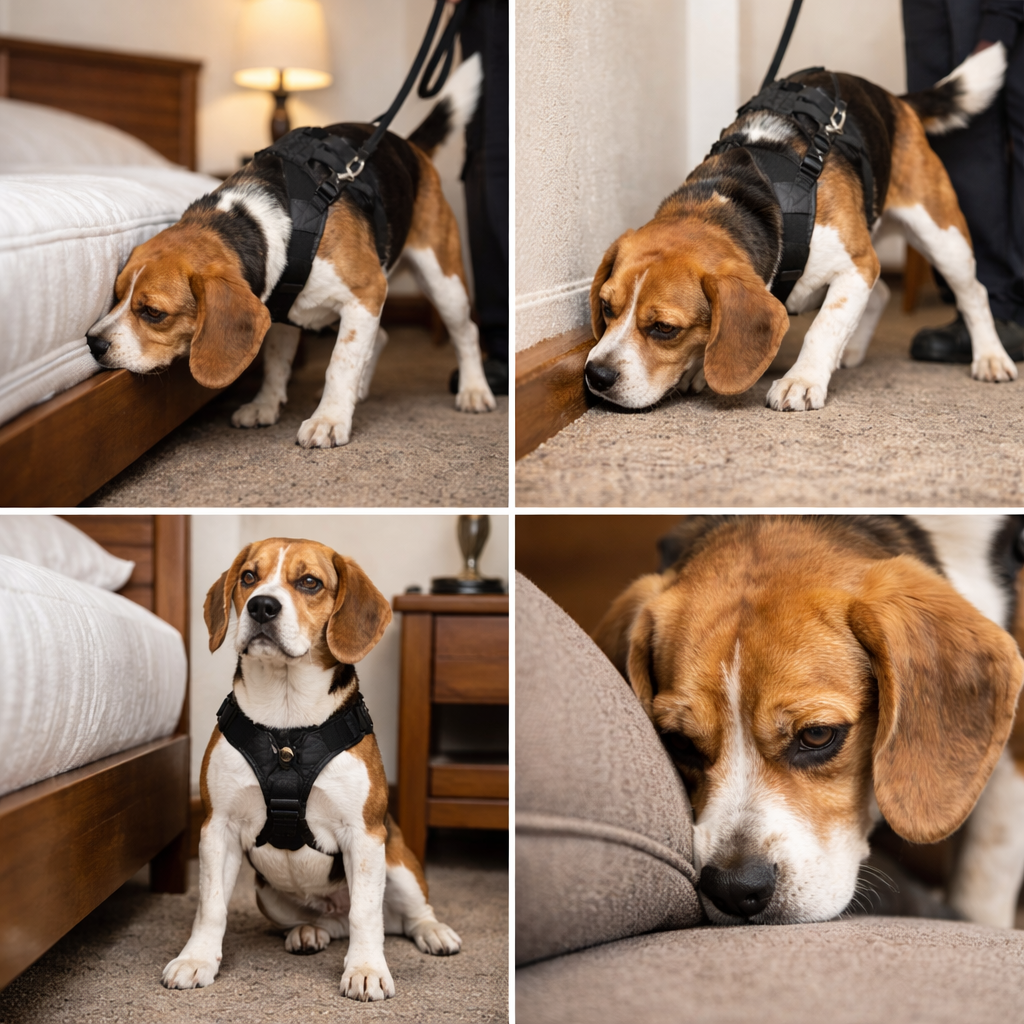
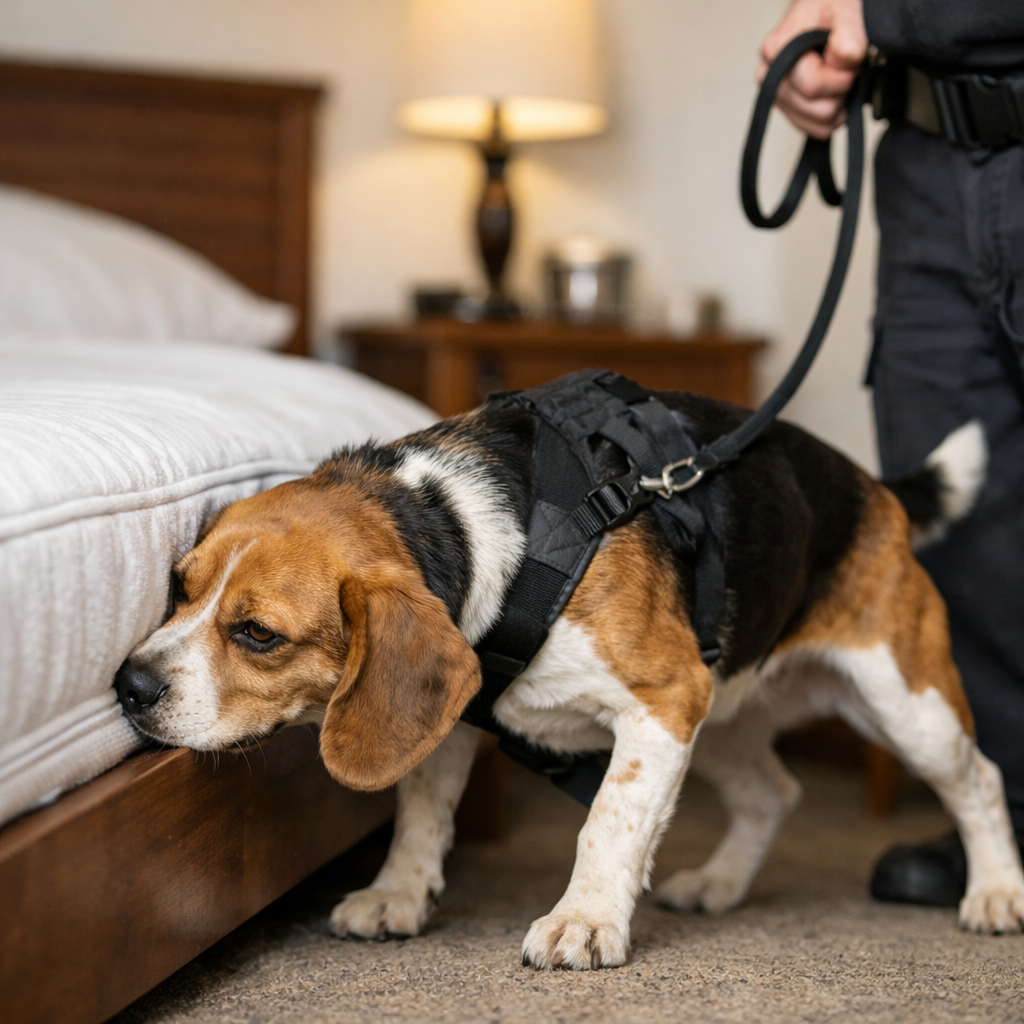
When a trained detection dog locates bed bugs, the behavior is usually clear and deliberate. These dogs are not simply wandering around sniffing randomly—they are working.
Some of the most common signs include:
- Intense, focused sniffing in one specific area
- Slowing down and concentrating on a seam or crack
- Freezing in place
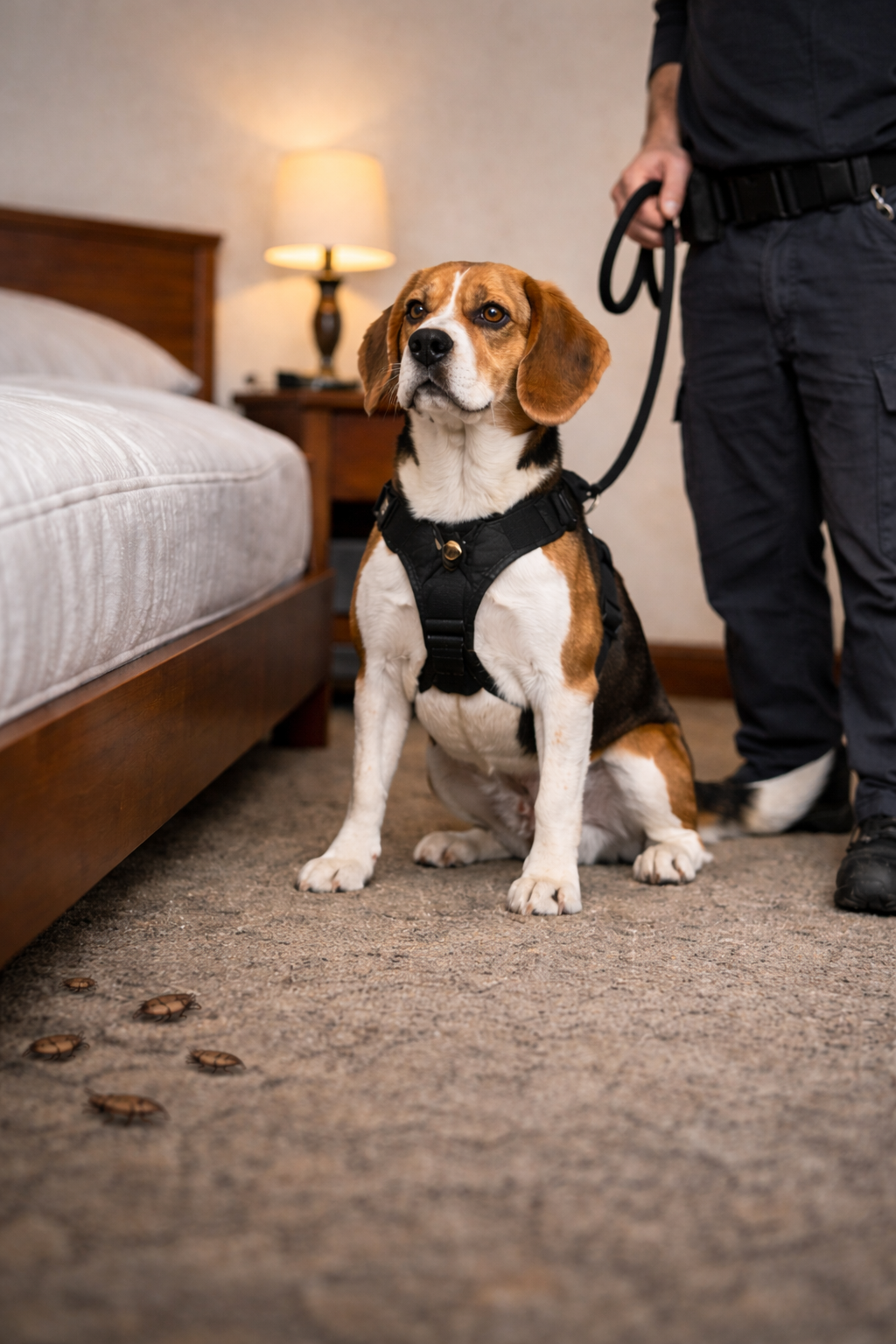
- Sitting down beside the source of the scent
- Looking back at the handler for confirmation
Most bed bug detection dogs are trained to give a passive alert, such as sitting or lying down. This prevents damage to furniture and keeps the inspection professional and controlled. If you see a dog calmly sit beside a bed frame after carefully sniffing it, that’s often a trained alert behavior.
Body Language During Bed Bug Detection
Dogs communicate constantly through body language, and during detection work, even small changes matter.
Here are some behaviors handlers watch closely:
- Rapid air sniffing: Quick inhalations as the dog isolates scent particles.
- Head snap or sudden turn: The dog may catch a scent plume and quickly redirect.
- Tail stiffening or slowing wag: A sign of concentration.
- Re-checking the same spot: The dog is confirming the odor.
- Sitting or freezing: The trained final alert.
To an untrained eye, these cues may seem subtle. That’s why handler experience is just as important as the dog’s training. A good handler knows the difference between casual curiosity and a genuine alert.
The History of Dogs in Bed Bug Detection
Bed bugs were once largely under control in many parts of the world. After World War II, widespread pesticide use significantly reduced infestations. However, in the late 1990s and early 2000s, cases began rising again due to pesticide resistance and increased international travel.
As infestations spread, pest control professionals needed faster and more accurate ways to locate hidden bugs. Since dogs had already proven effective in narcotics, explosives, and search-and-rescue work, adapting them for bed bug detection was a natural step.
Organizations such as the National Entomology Scent Detection Canine Association began developing certification standards, while research institutions like the University of Florida studied detection accuracy under controlled conditions. Over time, canine inspections became a recognized part of integrated pest management.
The Science Behind Dogs Detecting Bed Bugs
A dog’s nose is truly remarkable. While humans have around 5 to 6 million scent receptors, dogs can have up to 300 million, depending on the breed. Their brains are also specially wired to process scent information far more efficiently than ours.
Live bed bugs and viable eggs release tiny amounts of volatile organic compounds (VOCs). Trained dogs learn to recognize this specific odor profile and ignore unrelated smells in the environment.
Common breeds used in scent detection work include:
- Beagle, known for focus and manageable size
- Bloodhound, famous for tracking ability
- Labrador Retriever, valued for trainability and versatility
Research shows that under controlled conditions, well-trained dogs can reach detection rates above 90 percent. However, real-world performance varies. Environmental distractions, handler influence, and inconsistent training can affect results.
Training a Dog to Detect Bed Bugs
Training a bed bug detection dog is not something that happens overnight. It requires structured, consistent work.
The process typically includes:
- Scent Imprinting: The dog is introduced to live bed bug odor and rewarded for recognizing it.
- Positive Reinforcement: Toys or treats build strong motivation.
- Blind Testing: The handler does not know where the scent is placed, preventing unintentional cues.
- Ongoing Practice: Regular training sessions maintain accuracy.
Certification programs, including those offered by the National Entomology Scent Detection Canine Association, help ensure professional standards are met. Equally important is handler education—because even the best dog can give unreliable results without proper guidance.
Safety Tips for Bed Bug Detection Dogs
Detection dogs are working animals, and their health and safety must come first.
Important safety considerations include:
- Avoiding recently treated areas with chemical pesticides
- Ensuring proper hydration and rest breaks
- Maintaining routine veterinary care
- Transporting dogs in secure, climate-controlled vehicles
- Minimizing distractions during inspections
A healthy, focused dog performs better and provides more reliable results.
Tips & Things to Know
- Detection dogs can locate live bed bugs and viable eggs through scent.
- Most are trained to give a passive alert, such as sitting.
- Accuracy depends heavily on training quality and handler experience.
- Dogs should be used alongside visual inspections, not as the only method.
- Certification and ongoing training significantly improve reliability.
Frequently Asked Questions (FAQs)
How do bed bug detection dogs locate bed bugs?
They identify the specific odor released by live bed bugs and viable eggs, even when hidden behind walls or inside furniture.
What behaviors show a dog has found them?
Focused sniffing, posture changes, and a trained passive alert—usually sitting—are common indicators.
How reliable are detection dogs?
In controlled environments, detection rates can exceed 90 percent. In real-life situations, reliability varies depending on training and handling.
How are dogs trained?
Through scent imprinting, reward-based conditioning, blind testing, and continuous reinforcement.
Are there safety concerns?
Yes. Dogs must avoid pesticide exposure, overheating, and excessive fatigue. Proper care and professional handling are essential.
Conclusion / Final Thoughts
Bed bug detection dogs offer a practical and efficient way to locate hidden infestations. Their powerful sense of smell allows them to find what humans often miss, especially in early stages.
That said, their effectiveness depends on proper training, certification, and skilled handling. When used as part of a comprehensive inspection strategy, canine detection can make a meaningful difference in identifying and managing bed bug problems quickly and accurately.